
What's the best time of day to photograph wildflowers?
Light can make all the difference in your photograph. Light is what truly makes an image come to life. Using light can really bring attention to the main subject or complement the scene.
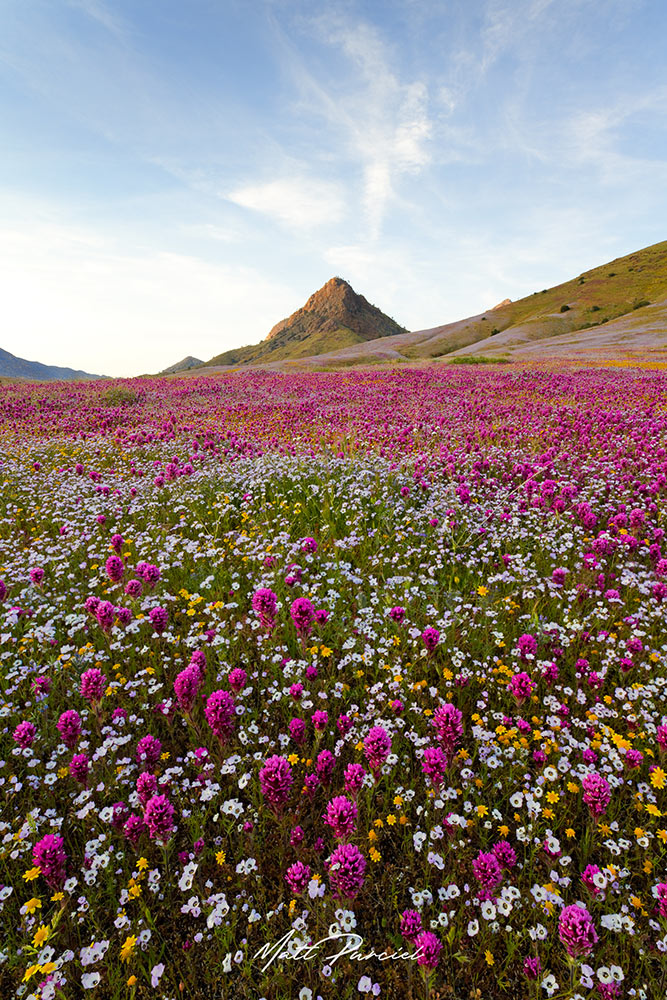
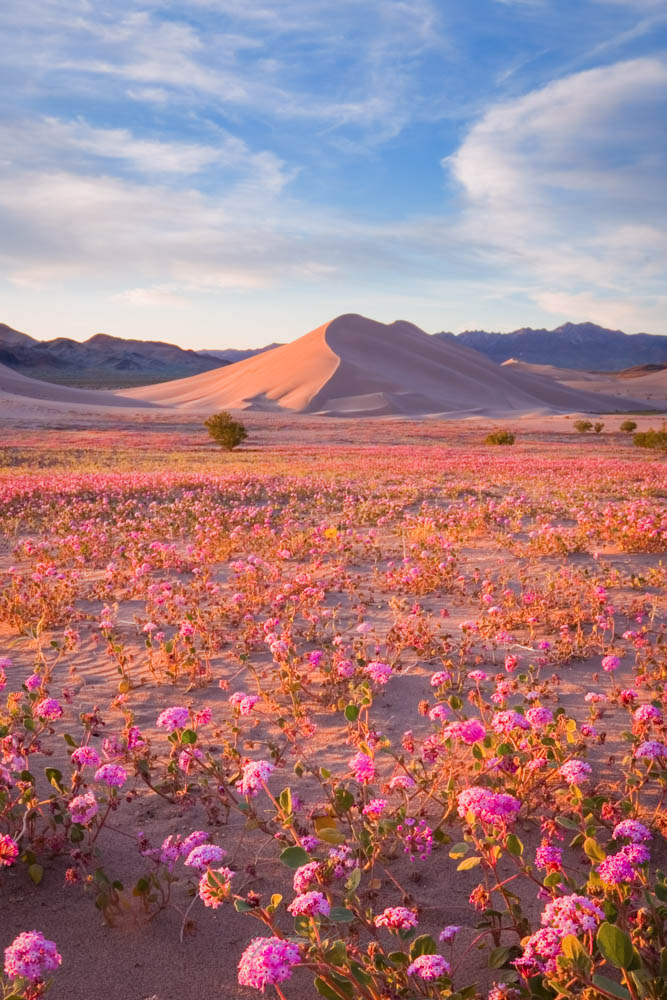
The best time to photograph wildflowers is during golden hour, generally 30 to 45 minutes after sunrise or before sunset as the sun is near the horizon. These few moments of diffracted sunlight really showcase the flowers in warm, soft light that draws the viewer's attention. Another good opportunity is when there are clouds. The flowers will be cast in soft, cool light, and the even contrast across the scene makes for a pleasing color balance.
What's the best lens and equipment for wildflower photography?
My go-to lens for wildflowers is definitely a fast 14-24mm wide-angle lens. Another great focal length is 16-35mm. You can get right into the flower and make it look larger than life. For big meadow scenes I switch to 16-35mm or 24-70mm. It compresses the scene nicely and lets me isolate one flower against a beautiful bokeh background. A sturdy tripod is a must. There are both heavy and lightweight tripods available. Also make sure to use your camera phone. I like to use my iPhone to find compositions, capture the color balance, and take video. Surprisingly, I tend to use it more and more, especially for video.
Recommended Equipment- Tripod: A sturdy tripod is essential to stabilize your framing and prevent blur, especially when working with slow shutter speeds.
- Lenses: Use fast wide-angle lenses (11-24mm or 16-35mm range) to capture expansive foreground detail.
- Fast Aperture: A lens with an aperture of f/2.8 helps freeze movement, especially if there is wind.
- Camera phone: Use it to find compositions and capture the color balance.
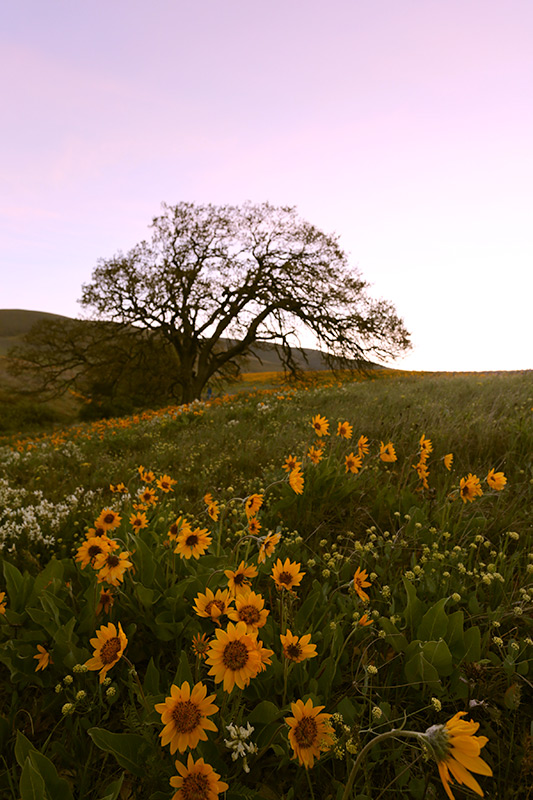
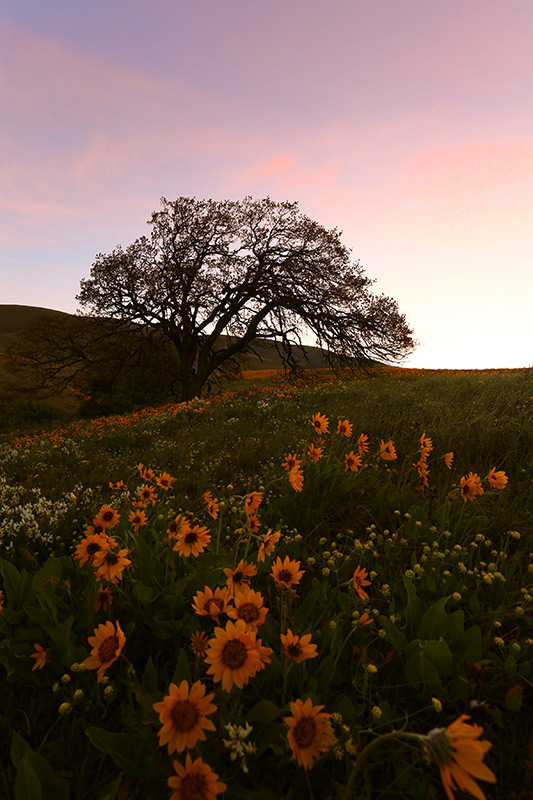
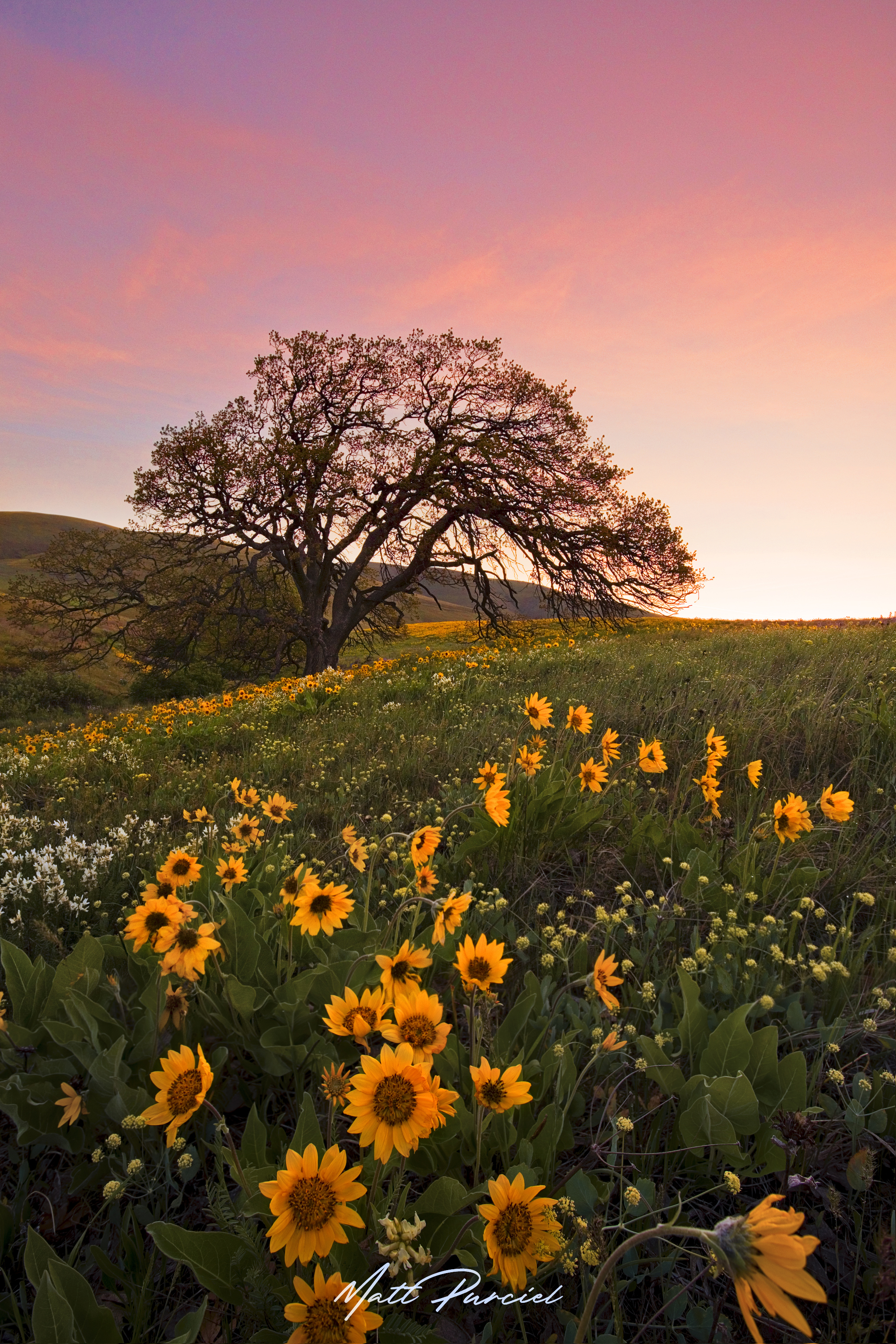
Recommended camera settings that I use
Here is my usual starting point. I adjust on the spot depending on wind, light, and depth.- Aperture f/8 to f/16 for sharpness through the scene. I usually land between f/11 and f/13.
- Shutter speed 1/100 second or faster to freeze movement, especially if there is wind.
- ISO 100 to 400. Keep it as low as you can.
- Plus focus stacking when I want maximum sharpness from front to back. I take 3-5 photos, focusing on the closest petal, then mid-distance, and finally the background to make sure I have the full depth of field.
- Bracket when I want to ensure I have the perfect exposure. I take multiple shots with various exposures to capture both the highlights and the shadows. There is nothing worse than blown-out skies.
- Shoot in RAW and use a remote shutter or the 2-second timer to avoid camera shake.
Composition & field techniques
As with most areas of photography, composition is critical in achieving successful imagery. Wildflower photography is highly visual and expressive, so the bold elements and textures make it easy to include too much. Wildflower meadows can be very busy and overwhelming, causing many beginners to include as much in the frame as possible, leading to a very busy, chaotic, and unorganized image. The key to a great photograph is simplicity. Simplifying the composition will go a long way in creating an image that is cohesive and pleasing.
Walk around the scene before you set up your tripod. The best angle is rarely the first one you see. Get low to the ground. Look for strong leading lines, repeating patterns of color, and one sharp hero flower with soft background bokeh.
Composition and Color Tips- Simplify! Simplify! Simplify: Wildflower meadows can be busy; choose a specific focal point that you like rather than trying to include everything in the frame.
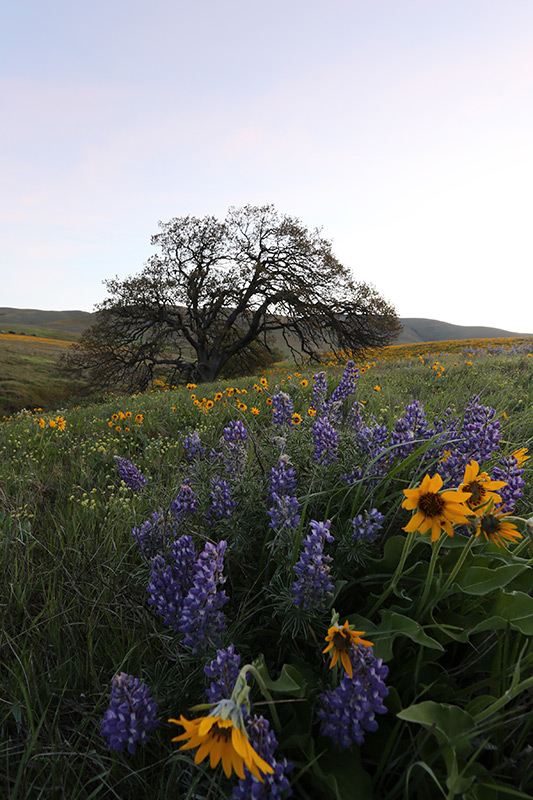
- Balance Tones: Use the color wheel to look for patterns and pair warm and cool tones. For example, complement purple lupine (cool) with yellow arrowleaf balsamroot (warm).
Beginner’s quick-start guide to wildflower photography
Start simple. Take one camera body, one lens, a tripod, and head out during golden hour. Practice close to home first. Then chase the bigger blooms in the American West. The biggest skill you can develop is patience with the wind and light. The more time you spend in the field, the more you learn to read the conditions. The best advice I would give is to enjoy nature.
Where to find wildflower fields near me?
Doing your research. This can be accomplished using social media, internet, books, and apps that help identify prime flower locations. Forums and trip reports can also prove very helpful, as can looking back at past seasons. Peak season for wildflowers varies each year and season quite a bit so make sure to do your diligence from a wide variety of sources.
Don’t Doom the Bloom
As you get lost in smelling and photographing the bloom, be sure to enjoy the wildflowers and tread gently! Wildflowers provide a means of survival to bees, butterflies, and other animals. And the forbs themselves need a chance to survive.